History of Fashion Design Post-War Pattern & Fashion Periodicals

Digital Source Edition · Fashion & Media History (1948–1959)

Paper, Patterns, and the Post-War Silhouette.
Six German Fashion Magazines from Currency Reform to the 1950s.

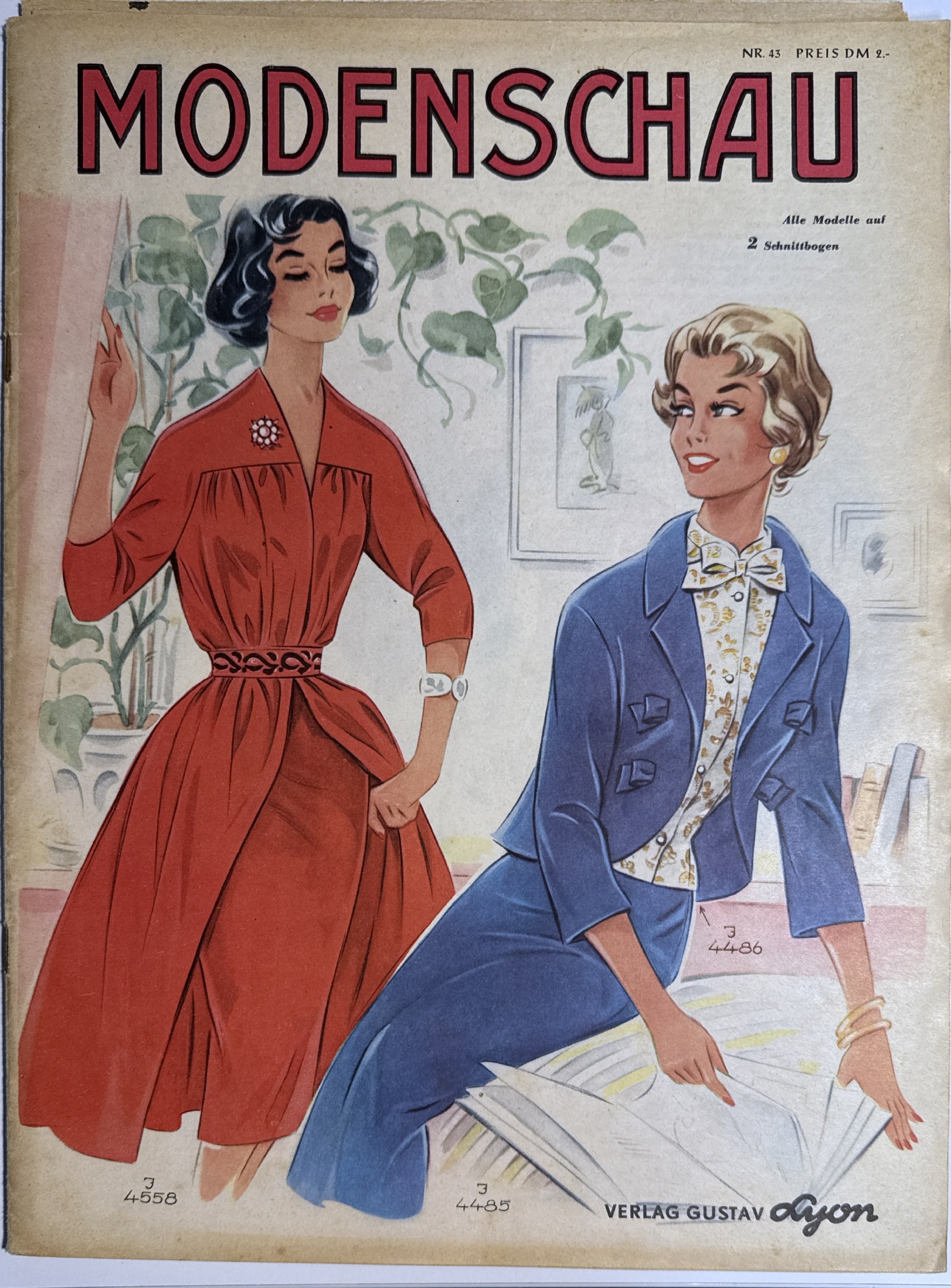
Between the West German Currency Reform of June 1948 and the late 1950s, sewing-pattern magazines (Schnittmuster-Zeitschriften) became the decisive medium through which international silhouettes entered everyday German life. This edition presents six archival title pages spanning both West Germany (Lahr/Offenburg in Baden) and East Germany (Leipzig and Berlin): the complete three-stage prehistory of Burda Moden—from Elfriede Breuer’s Effi Schnitte (1948) and Effi moden (July 1949) to Aenne Burda’s takeover issue favorit – Das Modenblatt (October 1949)—alongside two issues of the East German quarterly Guter Rat für heute und morgen (Leipzig, Summer 1958 and Spring 1959) and the Berlin salon magazine Modenschau (Verlag Gustav Lyon, ca. 1955/56).

Archival Source: Six original magazine title-page scans digitized in scans/1948-09-01_Schnittmuster_Bogen.pdf. Each plate below opens a dedicated full-page visual and textual edition combining the high-resolution facsimile, interactive region highlights, detail crops, diplomatic transcription, dating proof, circulation analysis, and garment-construction commentary.

6 Archival magazine title pages
1948–1959 Chronological span (post-Currency Reform to 1950s)
3 + 3 West German (Lahr/Offenburg) vs. East German (Leipzig/Berlin)
1.00–2.00 DM Cover price range (incl. 1–2 pattern sheets)
768,500 Peak quarterly print run (Guter Rat, Leipzig)

The Six Magazine Title Pages — Individual Editions

Click any cover or “Open Full Edition Page” for the side-by-side image/text analysis and detail crops

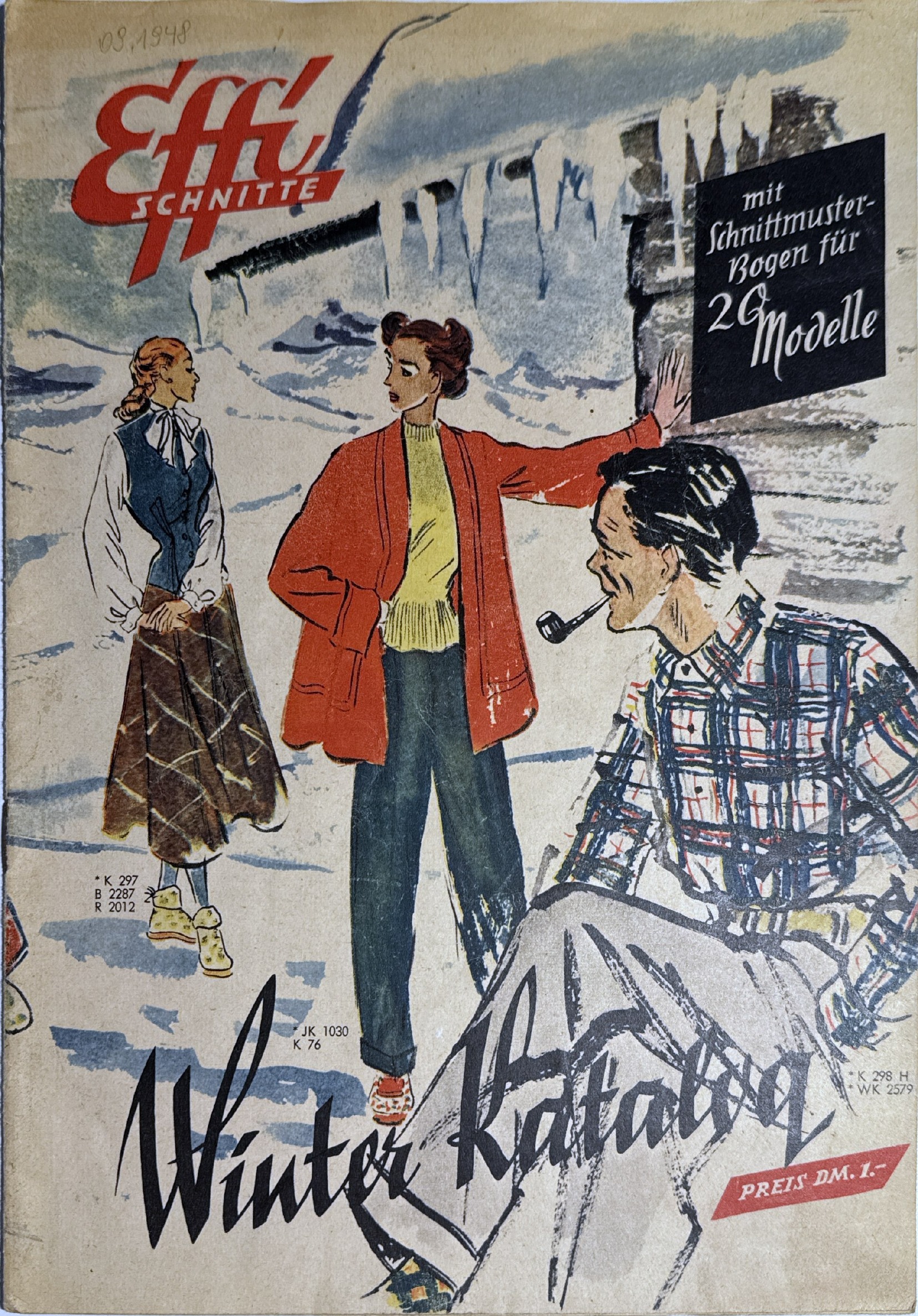
Plate 1 · Sept 1948 Lahr / Baden (West) Cover of Effi Schnitte Winter Katalog, September 1948

Prehistory of Burda Moden · Stage I

Effi Schnitte — Winter Katalog

Published only weeks after the June 1948 Currency Reform (priced at DM 1.—), Elfriede Breuer’s seasonal pattern catalog pairs Christian Dior’s early “New Look” A-line plaid skirt with women’s wide-cut winter leisure trousers and a men’s tartan sport shirt—all drafted onto a single 20-model pattern sheet.

Dated: 09.1948 1 Pattern Sheet (20 Models) Gouache Illustration Codes: K 297 · JK 1030 · K 298 H
PublisherEffi-Moden (Elfriede Breuer), Lahr
PriceDM 1.—
Distribution~20,000–45,000 (Zonal start-up)
AudiencePost-war home sewists & tailors
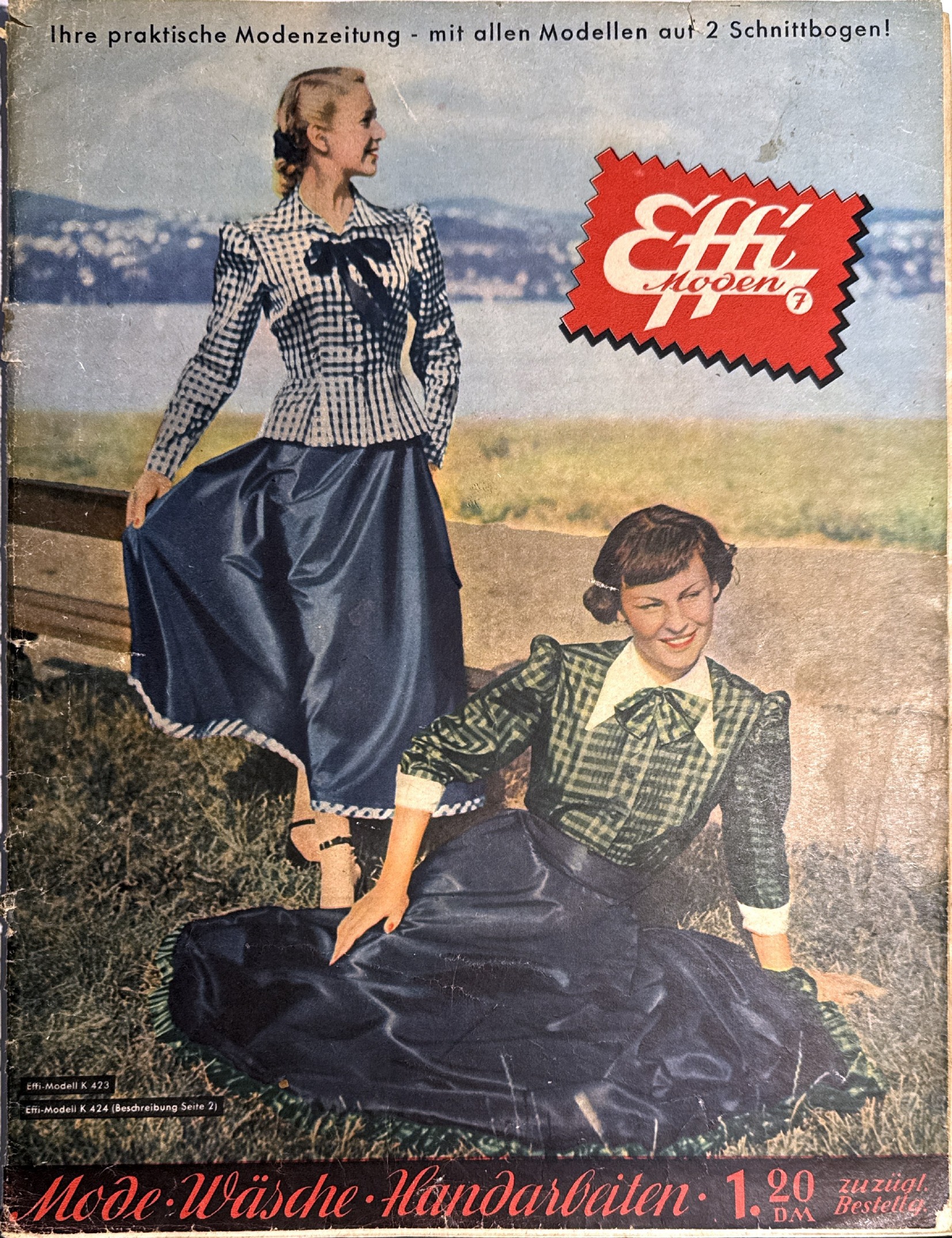
Plate 2 · July 1949 Lahr / Baden (West) Cover of Effi moden Nr. 7, July 1949

Prehistory of Burda Moden · Stage II

Effi moden — Heft Nr. 7

In 1949 Breuer converted her pattern catalog into a monthly periodical (Ihre praktische Modenzeitung) with color cover photography and two full pattern sheets. Issue No. 7 (July 1949) is one of the final issues printed before Aenne Burda’s historic takeover of the Lahr publishing house.

Dated: July 1949 (Nr. 7) 2 Pattern Sheets Color Photography Models K 423 & K 424
PublisherVerlag Effi Moden, Lahr
Price1.20 D.M. + Bestellgeld
Distribution~40,000–65,000 copies
AudienceMiddle-class home dressmakers
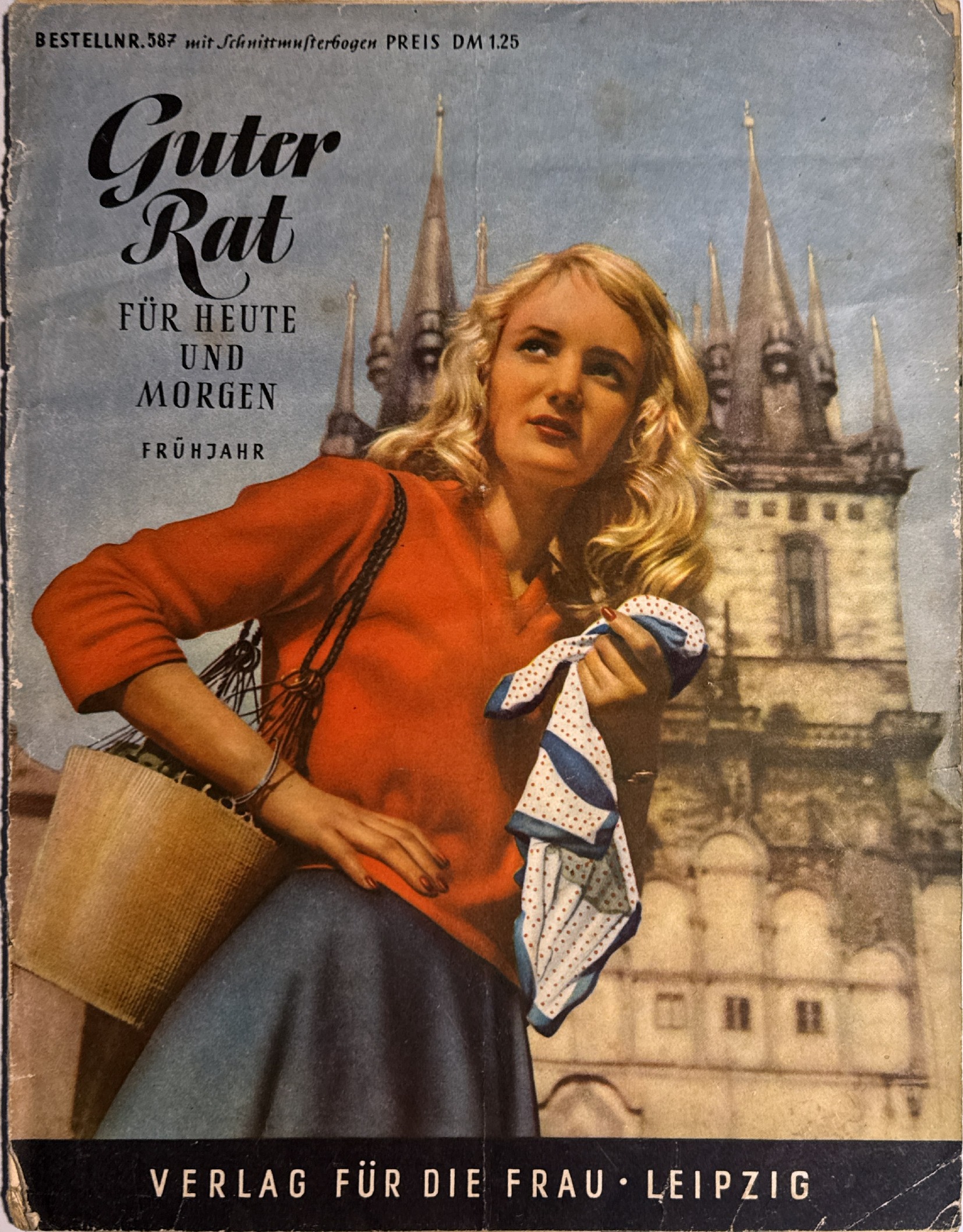
Plate 3 · Spring 1959 Leipzig (GDR / East) Cover of Guter Rat für heute und morgen, Bestellnr. 587, Spring 1959

East German Mass Consumer & Fashion Culture

Guter Rat für heute und morgen (Nr. 587)

Published in Leipzig by the state-owned Verlag für die Frau (founded 1946 from the expropriated Otto Beyer Verlag). Photographed before Leipzig’s New Town Hall, Order No. 587 dates precisely to Spring 1959 (following Order No. 586, Winter 1958) and documents the GDR’s coveted 768,500-copy quarterly while it still included a fold-out pattern sheet.

Dated: Spring 1959 (Bestellnr. 587) With Pattern Sheet 768,500 Avg. Print Run Leipzig Rathaus Backdrop
PublisherVerlag für die Frau · Leipzig
PriceDM 1.25 (GDR Mark)
Distribution~768,500 quarterly (Bückware)
AudienceWorking women & families in the GDR
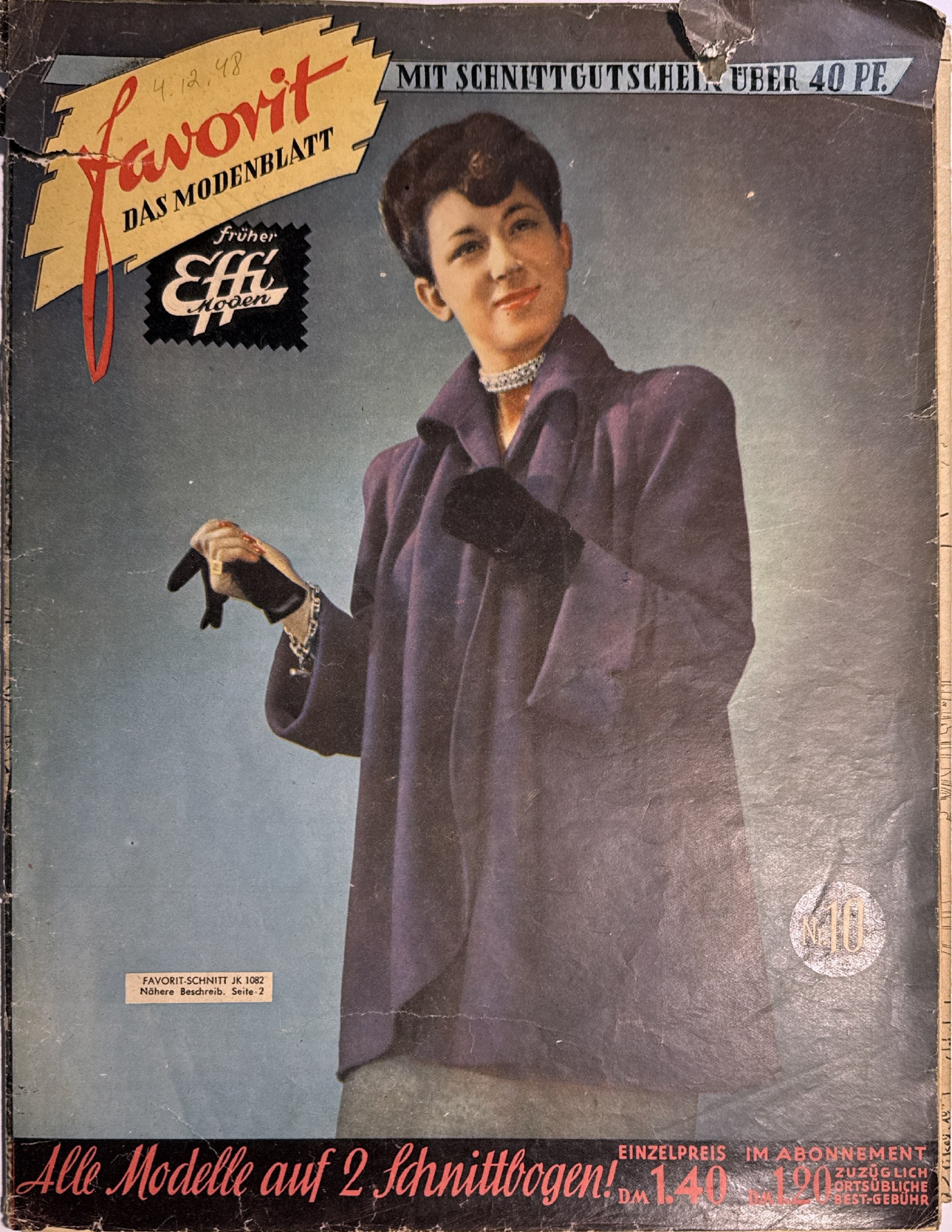
Plate 4 · 1 Oct 1949 Lahr / Offenburg (West) Cover of favorit Das Modenblatt Nr. 10 (Früher Effi Moden), October 1949

Prehistory of Burda Moden · Stage III (The Takeover Issue)

favorit — Das Modenblatt (Nr. 10)

A landmark document of German publishing history: bearing the explicit stamp “Früher Effi Moden” and issue seal Nr. 10, this is the inaugural issue published on 1 October 1949 when Aenne Burda took over Elfriede Breuer’s firm—just three months before renaming the magazine Burda Moden in January 1950. Includes source criticism of the top-margin pencil note 4.12.48.

Dated: 1 Oct 1949 (Nr. 10) Stamp: “Früher Effi Moden” 40 Pf. Pattern Coupon Code: JK 1082
PublisherFavorit / Aenne Burda, Lahr
PriceDM 1.40 (Subscr. DM 1.20)
Distribution~65,000 → 100,000 copies (Jan 1950)
AudienceSubscribers & newsstand home sewists
Plate 5 · ca. 1955/56 Berlin (Gustav Lyon) Cover of Modenschau Nr. 45, Verlag Gustav Lyon, Berlin, ca. 1955/56

Berlin Salon Tradition & Licensed Post-War Continuation

MODENSCHAU — Heft Nr. 45

Published by the storied Berlin house Verlag Gustav Lyon (founded 1842; pre-war international network in 14 capitals; re-licensed in East Berlin ca. 1947 until its 1963 absorption into Verlag für die Frau). Issue Nr. 45 (ca. 1955/56, priced at DM 2.—) preserves the house’s signature illustrated cover art and high-bourgeois salon elegance.

Dated: ca. 1955–1956 (Nr. 45) 2 Pattern Sheets Salon Illustration Codes: J 4558 · J 4485 · 3 4486
PublisherVerlag Gustav Lyon, Berlin
PriceDM 2.—
Distribution~50,000–100,000 copies
AudienceDressmaking salons & skilled sewists
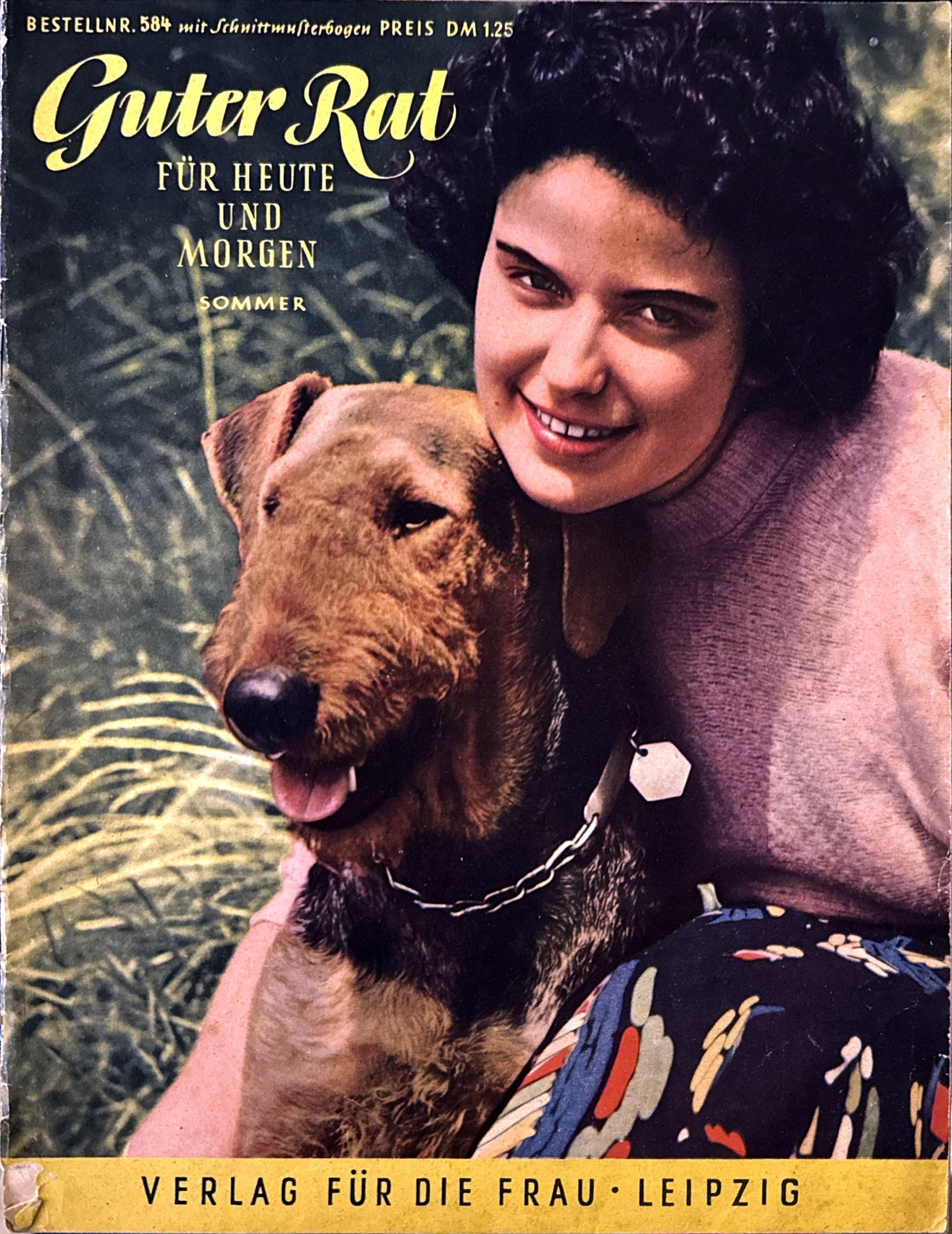
Plate 6 · Summer 1958 Leipzig (GDR / East) Cover of Guter Rat für heute und morgen, Bestellnr. 584, Summer 1958

East German Mass Consumer & Fashion Culture

Guter Rat für heute und morgen (Nr. 584)

The summer issue before Plate 3. Bestellnr. 584 prints only the season SOMMER. Counted back from the catalogued Bestellnr. 586 (Winter 1958) and from Plate 3 (Bestellnr. 587, Spring 1959), it is Summer 1958: same Leipzig house, same price of DM 1.25, and a pattern sheet, with a meadow portrait and a wire-haired terrier.

Dated: Summer 1958 (Bestellnr. 584) With Pattern Sheet Quarterly companion to Nr. 587 Meadow portrait
PublisherVerlag für die Frau · Leipzig
PriceDM 1.25 (GDR Mark)
DistributionSame quarterly scale as the title (~768,500)
AudienceWorking women & families in the GDR

Comparative Bibliographic, Economic & Circulation Matrix

Synthesizing dating evidence, print runs, pricing models, and technical pattern systems across all six issues

Plate Magazine & Issue Verified Date & Evidence Publisher & City Cover Price Pattern Supplement Distribution Size & Circulation Primary Audience
Plate 1 Effi Schnitte
Winter Katalog
September 1948
(Winter 1948/49; ink note 09.1948; post-June 1948 DM price)
Effi-Moden-Verlag (Elfriede Breuer)
Lahr (Baden), French Zone
DM 1.— 1 fold-out sheet for 20 models (K 297, JK 1030, K 298 H) ~20,000–45,000
(Regional start-up run financed by Franz Burda; 48 staff by 1949)
Post-war households reconstructing winter wardrobes from rationed or repurposed cloth
Plate 2 Effi moden
Heft Nr. 7
July 1949
(Monthly series Nr. 7 of 1949, preceding Oct 1949 takeover at Nr. 10)
Verlag Effi Moden (Elfriede Breuer)
Lahr (Baden), FRG
1.20 D.M.
+ Bestellgeld
2 pattern sheets covering all models + lingerie & needlework (K 423, K 424) ~40,000–65,000
(Expanding West German newsstand & postal subscription network)
Practical middle-class home dressmakers adopting the summer “New Look” silhouette
Plate 4 favorit – Das Modenblatt
Nr. 10 (“Früher Effi Moden”)
1 October 1949
(Printed stamp Früher Effi Moden + Nr. 10; pencil note 4.12.48 is retrospective)
Favorit-Verlag / Aenne Burda
Lahr / Offenburg (Baden), FRG
DM 1.40
(Subscr. 1.20)
2 pattern sheets + 40 Pf. individual cut-pattern coupon (JK 1082) ~65,000 → 100,000
(3-issue transitional title Oct–Dec 1949; 100,000 at Burda Moden Nr. 1, Jan 1950)
West German subscribers & amateur tailors transitioning to standardized home patterns
Plate 5 MODENSCHAU
Heft Nr. 45
ca. 1955–1956
(Post-1947 license sequence: Nr. 16 ≈ 1951, Nr. 34 = 1954 → Nr. 45 ≈ 1955/56)
Verlag Gustav Lyon
Berlin (founded 1842; East Berlin license 1947–1963)
DM 2.— 2 pattern sheets for all models (J 4558, J 4485, 3 4486) ~50,000–100,000
(Established Berlin house; merged into Verlag für die Frau in 1963)
Urban women, dressmaking salons (Maßateliers), and experienced home tailors
Plate 6 Guter Rat
für heute und morgen · Bestellnr. 584
Summer 1958
(Season Sommer; two quarterly steps before Bestellnr. 586 = Winter 1958)
Verlag für die Frau (ex-Otto Beyer)
Leipzig, GDR
DM 1.25
(GDR Mark)
1 fold-out pattern sheet (mit Schnittmusterbogen; sheet not in this scan) Series scale ~768,500 per issue
(No separate figure is printed on this cover; same quarterly and the same scarcity)
East German women and households sewing summer clothes from the enclosed pattern sheet
Plate 3 Guter Rat
für heute und morgen · Bestellnr. 587
Spring 1959
(Season Frühjahr; immediately follows Bestellnr. 586 = Winter 1958)
Verlag für die Frau (ex-Otto Beyer)
Leipzig, GDR
DM 1.25
(GDR Mark)
1 fold-out pattern sheet (mit Schnittmusterbogen, included until 1962) ~768,500 per issue
(Mass quarterly; chronic shortage relative to demand made it coveted Bückware)
Broad East German female & family readership combining fashion, DIY, and household advice

Historical Synthesis: Three Structural Themes in the 1948–1959 Corpus

For general readers and historians of design, media, and economic history

From Effi to Favorit to Burda Moden (1948–1950)

Plates 1, 2, and 4 form an unbroken primary-source chain documenting one of the most famous episodes in European publishing history. In 1948, the Offenburg printer and publisher Dr. Franz Burda secretly financed a fashion-pattern publishing house in neighboring Lahr for his former secretary and mistress, Elfriede (“Effi”) Breuer. Beginning as a seasonal catalog (Effi Schnitte, Plate 1, Sept 1948) and expanding in 1949 into the monthly Effi moden (Plate 2, Nr. 7, July 1949), the enterprise accumulated significant debt while employing 48 predominantly female staff.

When Franz Burda’s wife, Aenne Burda, discovered the dual relationship and competing business, she compelled her husband to transfer the Lahr publishing house to her control. On 1 October 1949, she issued the magazine under the transitional title favorit – Das Modenblatt with the printed notice “Früher Effi Moden” (Plate 4, Nr. 10).Notice how the pattern numbering system (JK 1030 on Plate 1 → JK 1082 on Plate 4; K 297 on Plate 1 → K 423/424 on Plate 2) and the pinked fabric-swatch logo geometry remain continuous across the takeover. Because another firm held rights to the name Favorit, Aenne Burda renamed the journal Burda Moden with Issue 1 in January 1950 (print run: 100,000 copies), laying the cornerstone for the world’s largest pattern-magazine empire.

Leipzig & Berlin vs. Lahr & Offenburg

Before 1945, Germany’s fashion and pattern publishing industry was overwhelmingly concentrated in Leipzig (Verlag Otto Beyer, founded 1890; Vobach) and Berlin (Verlag Gustav Lyon, founded 1842; Ullstein). Post-war division reshaped this landscape along ideological and economic lines:

  • Leipzig (Plates 6 and 3): Following the Saxon referendum of 30 June 1946, the renowned Verlag Otto Beyer was expropriated and reconstituted on 1 July 1946 as the state-owned Verlag für die Frau, Leipzig. Its flagship quarterly Guter Rat für heute und morgen (founded Nov 1945) retained Beyer’s technical pattern-sheet expertise while evolving into a socialist consumer, fashion, and household journal with a massive average circulation of 768,500 copies. This scan holds the summer issue of 1958 (Bestellnr. 584) and the spring issue of 1959 (Bestellnr. 587).
  • Berlin (Plate 5): Verlag Gustav Lyon—whose Jewish owner Louis Joseph (1880–1942) had been murdered during the Holocaust—received a post-war Soviet-sector license in Berlin around 1947. Throughout the 1950s, its Modenschau (Plate 5, Nr. 45, DM 2.—) preserved the refined, hand-illustrated salon aesthetic of Weimar Berlin until the firm was closed in 1963 and absorbed into Leipzig’s Verlag für die Frau.
  • West Germany (Plates 1, 2, 4): With Leipzig behind the Iron Curtain, new West German publishers in Lahr/Offenburg (Burda), Wiesbaden (where Paul Beyer re-established the western Beyer-Verlag before Aenne Burda acquired it in 1963), and Kiel stepped into the vacuum.

The Multi-Overlay Schnittmusterbogen & the Democratized “New Look”

All six covers prominently advertise their enclosed pattern sheets: “mit Schnittmuster-Bogen für 20 Modelle” (Plate 1), “Alle Modelle auf 2 Schnittbogen!” (Plates 2, 4, 5), and “mit Schnittmusterbogen” (Plates 3 and 6). In a period when ready-to-wear boutique clothing was either rationed or financially out of reach, the multi-contour pattern sheet was an information-design triumph: up to 20–40 garment pieces overlapped on two large folded sheets using distinct line styles (solid, dashed, dotted, dash-dot) and alphanumeric codes (K = Kleid, B = Bluse, R = Rock, JK = Jackenkleid/Jacke, J = Jacke, H = Herren).

Aesthetically, the six covers trace the evolution of the 1950s silhouette: from the immediate post-war synthesis of Dior’s 1947 Ligne Corolle (“New Look” nipped waist and bias-cut plaid A-line skirt) with practical winter trousers in September 1948 (Plate 1), through the crisp gingham/plaid blouses and voluminous skirts of July 1949 (Plate 2) and the dramatic amethyst-violet swing coat with pearl choker of October 1949 (Plate 4), to the sculpted cocktail and two-piece suit silhouettes of mid-1950s Berlin (Plate 5) and the relaxed everyday elegance of Leipzig in Summer 1958 (Plate 6) and Spring 1959 (Plate 3).