1 · Overview for General Readers
The Forgotten First Chapter of the Burda Moden Story
To millions of readers worldwide, Burda Moden is synonymous with home sewing and accessible fashion. Yet the enterprise did not begin under the name Burda. It began in 1948 in Lahr (Black Forest) under the name Effi Schnitte—named after Elfriede (“Effi”) Breuer, the former secretary and mistress of the Offenburg printer and publisher Dr. Franz Burda.
Issued in September 1948 for the approaching winter of 1948/49, this Winter Katalog is a rare surviving witness of that founding year. Only ten weeks earlier, on 20 June 1948, the Western occupation zones had introduced the Deutsche Mark (DM), overnight replacing the worthless Reichsmark and filling shop windows with goods that most families still could not afford to buy ready-made. For exactly 1.00 DM, this booklet offered not just a dream of post-war normalcy—a winter scene with snow, icicles, bright knitwear, and a pipe-smoking gentleman—but the practical blueprint to sew 20 complete winter garments at home from a single folded pattern sheet.
2 · Diplomatic Cover Transcription
Inscriptions, Callouts & Marginalia on Plate 1
Every printed text element and manuscript mark visible on the cover scan, ordered from top to bottom:
Upper Left Margin (Manuscript Provenance Note)
09.1948
Upper Left Masthead Emblem (Red Script + White Capitals on Red Bar)
Effi / SCHNITTE
Upper Right Angled Black Plaque
mit / Schnittmuster- / Bogen für / 20 Modelle
Pattern Callouts on Illustration (Left to Right)
[Left figure, waist/skirt:] * K 297 / B 2287 / R 2012
[Center figure, hip level:] JK 1030 / K 76
[Right foreground figure, chest:] * K 298 H / * WK 2579
Lower Center Main Title (Black Brush Script)
Winter Katalog
Lower Right Angled Red Plaque
PREIS DM 1.—
4 · Distribution Size, Audience & Historical Background
Economics of Post-War Pattern Publishing in the French Zone
Distribution Size & Corporate Organization
During its 1948–1949 operation under Elfriede Breuer in Lahr, Effi Schnitte / Effi Moden grew to a staff of 48 predominantly female employees (pattern drafters, illustrators, seamstresses, and clerical workers), printed with the technical backing of Franz Burda’s gravure and offset presses in neighboring Offenburg. While exact print-run ledgers for the 1948 seasonal catalog do not survive separately from the Burda takeover records, comparative licensing data from the Western zones in 1948/49 (cf. Wilhelm Seidel, Lizenzen-Handbuch deutscher Verlage, 1949) and the documented jump to 100,000 copies upon Aenne Burda’s re-launch as Burda Moden in January 1950 place the initial Effi Schnitte distribution in the range of 20,000 to 45,000 copies. Despite strong reader demand for patterns, Breuer’s operation ran at a financial deficit—the decisive leverage Aenne Burda used in 1949 when she forced Franz Burda to sign the company over to her.
Target Audience & Social Reality in Autumn 1948
In September 1948, German households faced their first winter under the new Deutsche Mark. Although textile rationing was being relaxed after the currency reform, ready-to-wear winter clothing remained prohibitively expensive, and millions of families still relied on unpicking, re-dyeing, or combining remnant fabrics (Stoffreste). Priced at just 1.00 DM (roughly equivalent to two loaves of bread or four streetcar tickets in 1948), this catalog targeted middle- and working-class women who owned a domestic treadle sewing machine (such as a pre-war Singer, Pfaff, or Naumann) and needed reliable, multi-size paper patterns for the entire household—including men’s shirts and workwear.
5 · Fashion Design & Technical Pattern Code Analysis
Decoding the Garments and Alphanumeric Pattern System
A defining feature of the Effi Schnitte system—retained directly in Plate 2 and Plate 4—is its modular prefix taxonomy printed directly beside each illustrated figure. An asterisk (*) marks models included on the enclosed 20-model master sheet, while additional individual cut patterns (Einzelschnitte) could be ordered by code:
* K 297 ·
B 2287 ·
R 2012
Left Figure (Early “New Look” Ensemble): Combines a fitted dark teal waistcoat/bodice (K 297 = Kleid/Kombination), a white long-sleeved blouse with a large soft neck bow (B 2287 = Bluse), and a longer, bias-cut brown plaid A-line skirt (R 2012 = Rock). Reflects the immediate German reception of Christian Dior’s 1947 Ligne Corolle: softened shoulders, nipped waist, and mid-calf hemline, executed in practical wool plaid.
JK 1030 ·
K 76
Center Figure (Women’s Winter Trousers & Jacket): A striking mid-century sports/leisure silhouette featuring a hip-length crimson jacket/cardigan (JK 1030 = Jackenkleid / Jacken-Kombination) over a lemon-yellow ribbed turtleneck and wide-legged, ankle-cuffed charcoal trousers (K 76) with red flat shoes. Note the lingering 1940s “victory roll” updo hairstyle paired with progressive winter slacks.
* K 298 H ·
* WK 2579
Right Foreground Figure (Menswear): The suffix H denotes Herren (menswear) and WK denotes Wäsche-Kombination / Herrenhemd. Depicts a bold red-white-blue tartan sport/lumberjack shirt—demonstrating how post-war domestic dressmaking encompassed men’s casual and winter shirts alongside women’s fashion.
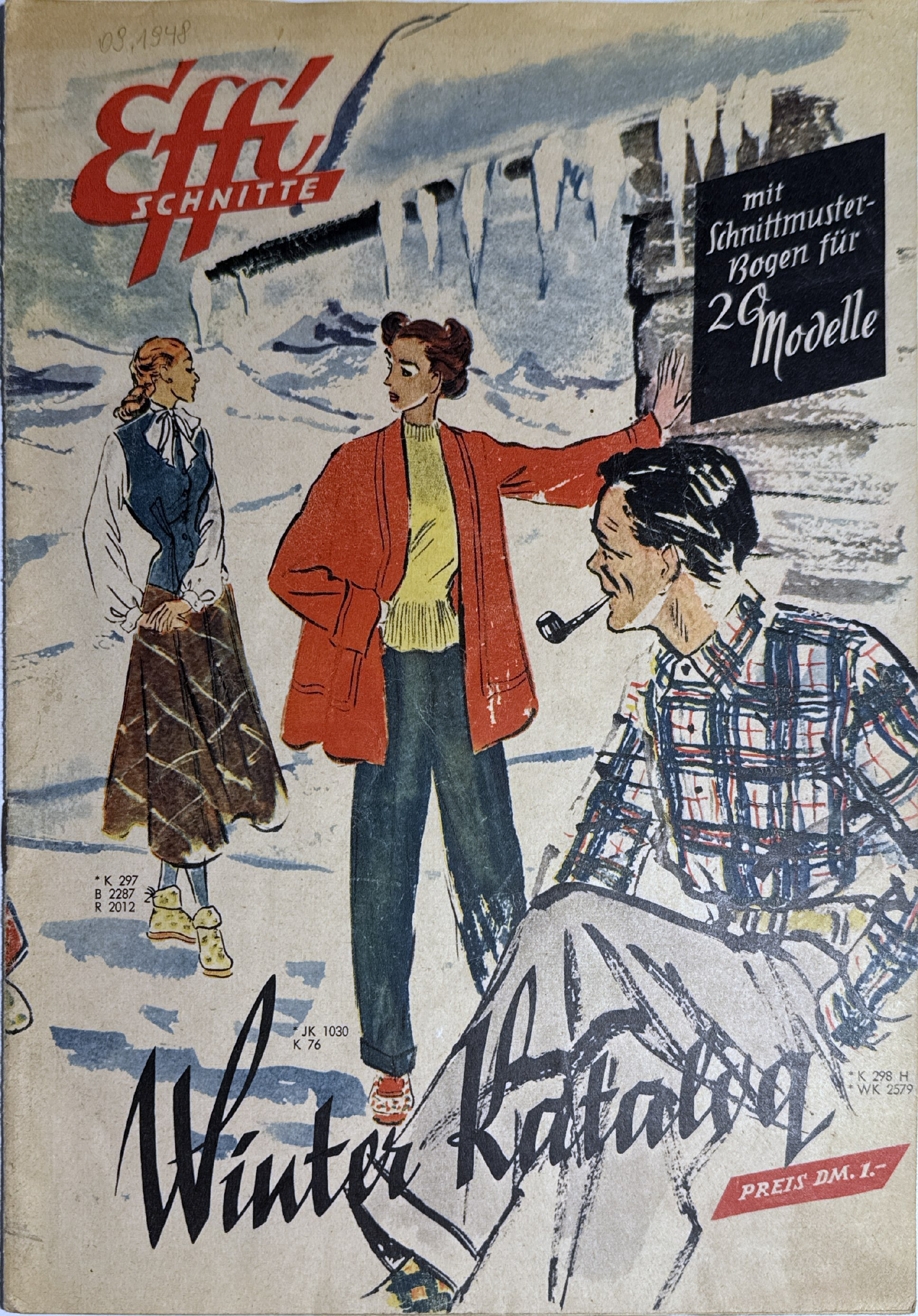
Plate 1 · Prehistory of Burda Moden (Stage I)
Effi Schnitte — Winter Katalog
“mit Schnittmuster-Bogen für 20 Modelle” · Lahr (Schwarzwald), September 1948
09.1948at upper left margin; confirmed by post-20 June 1948 Deutsche Mark pricing (PREIS DM 1.—).1 · Overview for General Readers
The Forgotten First Chapter of the Burda Moden Story
To millions of readers worldwide, Burda Moden is synonymous with home sewing and accessible fashion. Yet the enterprise did not begin under the name Burda. It began in 1948 in Lahr (Black Forest) under the name Effi Schnitte—named after Elfriede (“Effi”) Breuer, the former secretary and mistress of the Offenburg printer and publisher Dr. Franz Burda.
Issued in September 1948 for the approaching winter of 1948/49, this Winter Katalog is a rare surviving witness of that founding year. Only ten weeks earlier, on 20 June 1948, the Western occupation zones had introduced the Deutsche Mark (DM), overnight replacing the worthless Reichsmark and filling shop windows with goods that most families still could not afford to buy ready-made. For exactly 1.00 DM, this booklet offered not just a dream of post-war normalcy—a winter scene with snow, icicles, bright knitwear, and a pipe-smoking gentleman—but the practical blueprint to sew 20 complete winter garments at home from a single folded pattern sheet.
2 · Diplomatic Cover Transcription
Inscriptions, Callouts & Marginalia on Plate 1
Every printed text element and manuscript mark visible on the cover scan, ordered from top to bottom:
[Center figure, hip level:] JK 1030 / K 76
[Right foreground figure, chest:] * K 298 H / * WK 2579 Lower Center Main Title (Black Brush Script) Winter Katalog Lower Right Angled Red Plaque PREIS DM 1.—
3 · Dating & Source Criticism (Quellenkritik)
Establishing the Exact Date: September 1948
Three independent lines of evidence converge to date Plate 1 precisely to September 1948:
PREIS DM 1.—. The Deutsche Mark replaced the Reichsmark in the three Western occupation zones (including the French zone of Baden, where Lahr and Offenburg were located) on 20 June 1948. No winter catalog priced in DM could have been printed before summer 1948.09.1948at the top left records the late-summer/early-autumn release date standard for sewing catalogs (issued in August/September so home dressmakers could sew autumn and winter coats, skirts, and knitwear before November frost). Moreover, the dress pattern numbers here are in theK 297andJK 1030range, whereas by July 1949 (Plate 2) theKsequence had advanced toK 423–424, and by October 1949 (Plate 4) theJKsequence had reachedJK 1082.4 · Distribution Size, Audience & Historical Background
Economics of Post-War Pattern Publishing in the French Zone
Distribution Size & Corporate Organization
During its 1948–1949 operation under Elfriede Breuer in Lahr, Effi Schnitte / Effi Moden grew to a staff of 48 predominantly female employees (pattern drafters, illustrators, seamstresses, and clerical workers), printed with the technical backing of Franz Burda’s gravure and offset presses in neighboring Offenburg. While exact print-run ledgers for the 1948 seasonal catalog do not survive separately from the Burda takeover records, comparative licensing data from the Western zones in 1948/49 (cf. Wilhelm Seidel, Lizenzen-Handbuch deutscher Verlage, 1949) and the documented jump to 100,000 copies upon Aenne Burda’s re-launch as Burda Moden in January 1950 place the initial Effi Schnitte distribution in the range of 20,000 to 45,000 copies. Despite strong reader demand for patterns, Breuer’s operation ran at a financial deficit—the decisive leverage Aenne Burda used in 1949 when she forced Franz Burda to sign the company over to her.
Target Audience & Social Reality in Autumn 1948
In September 1948, German households faced their first winter under the new Deutsche Mark. Although textile rationing was being relaxed after the currency reform, ready-to-wear winter clothing remained prohibitively expensive, and millions of families still relied on unpicking, re-dyeing, or combining remnant fabrics (Stoffreste). Priced at just 1.00 DM (roughly equivalent to two loaves of bread or four streetcar tickets in 1948), this catalog targeted middle- and working-class women who owned a domestic treadle sewing machine (such as a pre-war Singer, Pfaff, or Naumann) and needed reliable, multi-size paper patterns for the entire household—including men’s shirts and workwear.
5 · Fashion Design & Technical Pattern Code Analysis
Decoding the Garments and Alphanumeric Pattern System
A defining feature of the Effi Schnitte system—retained directly in Plate 2 and Plate 4—is its modular prefix taxonomy printed directly beside each illustrated figure. An asterisk (
*) marks models included on the enclosed 20-model master sheet, while additional individual cut patterns (Einzelschnitte) could be ordered by code:* K 297·B 2287·R 2012Left Figure (Early “New Look” Ensemble): Combines a fitted dark teal waistcoat/bodice (
K 297= Kleid/Kombination), a white long-sleeved blouse with a large soft neck bow (B 2287= Bluse), and a longer, bias-cut brown plaid A-line skirt (R 2012= Rock). Reflects the immediate German reception of Christian Dior’s 1947 Ligne Corolle: softened shoulders, nipped waist, and mid-calf hemline, executed in practical wool plaid.JK 1030·K 76Center Figure (Women’s Winter Trousers & Jacket): A striking mid-century sports/leisure silhouette featuring a hip-length crimson jacket/cardigan (
JK 1030= Jackenkleid / Jacken-Kombination) over a lemon-yellow ribbed turtleneck and wide-legged, ankle-cuffed charcoal trousers (K 76) with red flat shoes. Note the lingering 1940s “victory roll” updo hairstyle paired with progressive winter slacks.* K 298 H·* WK 2579Right Foreground Figure (Menswear): The suffix
Hdenotes Herren (menswear) andWKdenotes Wäsche-Kombination / Herrenhemd. Depicts a bold red-white-blue tartan sport/lumberjack shirt—demonstrating how post-war domestic dressmaking encompassed men’s casual and winter shirts alongside women’s fashion.